Dry Microbial Penetration Resistance Tester is designed to determine determine the penetration resis
WhatsApp : +86 13816217984
Email : info@qinsun-lab.com

The Dry Microbial Penetration Resistance Tester assesses material resistance to dry bacteria-carrying particles (like human dandruff-sized). It tests protective gear (surgical gowns, etc.) per ISO 22612. part of EN 13795 and EN 14126 test suites. Compliance with EN 13795 aligns with EU Medical Device Directive 93/42/EEC, crucial for CE marking in Europe.
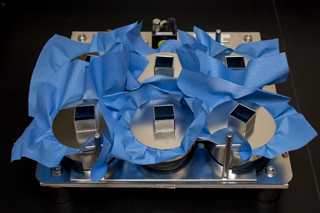
Dry microbial penetration resistance performance tester is professionaly used to determine the bacterial penetration resistance performance of materials to dry particulates in the size range of human body dandruff. Whenn testing, the samples were fixed on a container respectively. In these containers, five containers containing subtilisin talc, one container added with Not stained talcum powder was used as a control. A Petri dish was inserted at the bottom of each container at a distance from the bottom of the timer.
The equipment supporting the container is oscillated by a Gas ball oscillator, and all the talc penetrating the sample Falled on the culture dish , cultured without the culture vessel. The test results were evaluated by counting the growing colonies.
ISO 22612: Clothing for protection against infectious agents - Test method for resistance to dry microbial penetration
YY / T 0506.5-2009: Surgical drapes, gowns and clean air suits for patients, clinical staff and equipment - Part 5: Test method for resistance to dry microbial penetration
Reliable design, stable test;
Front switch glass doors, easy to observe the operation of the experimental staff;
Removable bracket, height adjustable bracket;
Support, mobile dual casters;
Negative pressure experimental system, with the fan exhaust system and the introduction of high efficiency filter to ensure the safety of operators;
Embedded high - speed industrial microcomputer control;
Dedicated operating software, with software parameters calibration, fault detection automatically
When testing, the samples were seperately fixed on a container. In these containers, five containers carrying the bacillus subtilis and 1 container carrying uncontaminated talc powder used as control. Insert 1 petri dish at the bottom of each container and beneathe the bottom of the specimen.
The supporting vessel's equipment is oscillated by a gas ball type oscillator, and all of the talcum powder passing through the sample falls onto the petri dish. Remove the petri dish for culture. The experiment results were evaluated by counting the colonies.
| Parameter Name | Parameter Value |
|---|---|
| Vibration form | pneumatic ball vibrator |
| Vibration frequency | 20800 times/min |
| Vibration force | 650N |
| Worktable size | 40cm × 40cm × 10mm |
| Workbench media | marble plate |
| Experimental container | stainless steel test container |
| Work stations | 6 |
| Cabinet negative pressure range | -50 Pa ~ -200 Pa |
| High efficiency filter filtration efficiency | better than 99.99% |
| Negative pressure cabinet ventilation flow | ≥ 5m³/min |
| Data storage capacity | 100.000 group |
| Working voltage | 220V 50HZ |
The accessories and specifications for the dry microbial permeability resistance tester are as follows:
Pneumatic Ball Oscillator: Generates high-frequency vibrations of 20.800 times per minute to simulate microbial activity on material surfaces, ensuring test accuracy and stability.
Stainless Steel Test Container: Typically equipped with 6 sets, featuring a metal piston on top to secure the specimen and maintain its slack within a controllable range.
Petite Dishes: Placed at the bottom of the test container to collect talc powder penetrating the specimen. Colony counting is performed through isothermal incubation to evaluate the material's microbial barrier properties.
Marble Workbench: Measuring 400mm × 400mm × 10mm, providing a stable testing platform to ensure accuracy and repeatability during testing.
Fixing Plate and Rubber Supports: The fixing plate secures the test container, while the rubber supports adjust the level, stabilize the instrument's position, and prevent movement.
Compressed Air Flow Meter: Measures the airflow generating 20.800 vibrations per minute, ensuring stable test conditions.
Color Touchscreen User Interface: Used for preset parameters and displaying test results, improving ease of operation and intuitiveness.
Protective system components: including a negative pressure testing system and inlet/outlet HEPA filters, ensuring operator safety while preventing microbial leakage during testing.
The core principle of the barrier microbial penetration tester is to simulate the transmission scenario of microorganisms carried by human skin flakes. By detecting the ability of microbial carriers to penetrate the sample, the barrier performance of the material is evaluated. The specific process is as follows:
Sample Preparation and Installation: The sample to be tested (e.g., surgical gown, cleanroom garment fabric) is fixed on top of six test containers and tightened using metal pistons to ensure no loosening or leakage.
Microbial Carrier and Control Setup: Talc carrying Bacillus subtilis is added to five containers, and uncontaminated talc is added to one container; simultaneously, a sterile petri dish is placed in the narrow opening at the bottom of each container.
Vibration Test: The pneumatic ball oscillator is activated via the control unit. Driven by compressed air, the oscillator vibrates at a frequency of 20.800 times per minute, generating a force of 650N. During vibration, the microbial carriers inside the containers continuously impact the sample surface, simulating the process of microorganisms detaching with skin flakes and penetrating the material in actual use.
Microbial Collection and Cultivation: After vibration, the petri dish at the bottom of the container is removed. The culture medium within will adsorb the microbial carriers that have penetrated the sample. The petri dishes were incubated in a suitable environment for a period of time. After colony growth, the colony counts of the five experimental groups and one control group were recorded.
Result Interpretation: By comparing the colony counts of the experimental and control groups, the microbial penetration rate was calculated to evaluate the barrier performance of the sample against dry microbial carriers—the lower the colony count, the better the material's barrier performance against dry microbial penetration.
YouTube video introduction:https://www.qinsun-tester.com/other/5969.html
Qinsun Instruments Co., LTD is a professional laboratory testing instrument manufacturer in China,Have been focusing on laboratory instrument R&D more than 30 years and have rich industry experience,Based on international testing standards,We are also the instrument supplier for BV SGS laboratory,We provide one-stop solutions for lab instruments,Free Training and Turn-Key Service,Products exported all over the world,Offer 36 month warranty and are a trustworthy partner.

Company Phone
+86-21-6420 0566
Working hours
Monday to Friday
Mobile phone:
13816217984
Email:
info@qinsun-lab.com